CLIMA Brings Stakeholders Together to Shape Evidence on the Health, Environmental and Social Co-benefits of Climate Mitigation in Kenya
Kenya has ambitious climate goals, the strategy includes emission reduction, afforestation, and economic protection by ensuring climate adaptation to protect communities from recurring losses.
Turning these goals into effective action takes more than national commitments. Besides, for any meaningful change, decision-makers need local evidence about which actions rank the best in improving air quality, protecting health, supporting livelihoods while delivering value for public investment.
Getting that evidence is at heart of the work at CLIMA, a project led by the Center for Epidemiological Modelling and Analysis (CEMA) at the University of Nairobi. However, the project is not intended to study every idea in isolation. Its aim is to help identify a focused set of feasible, high-impact actions and provide evidence that counties and other decision-makers can use in planning and funding, together with stakeholders.
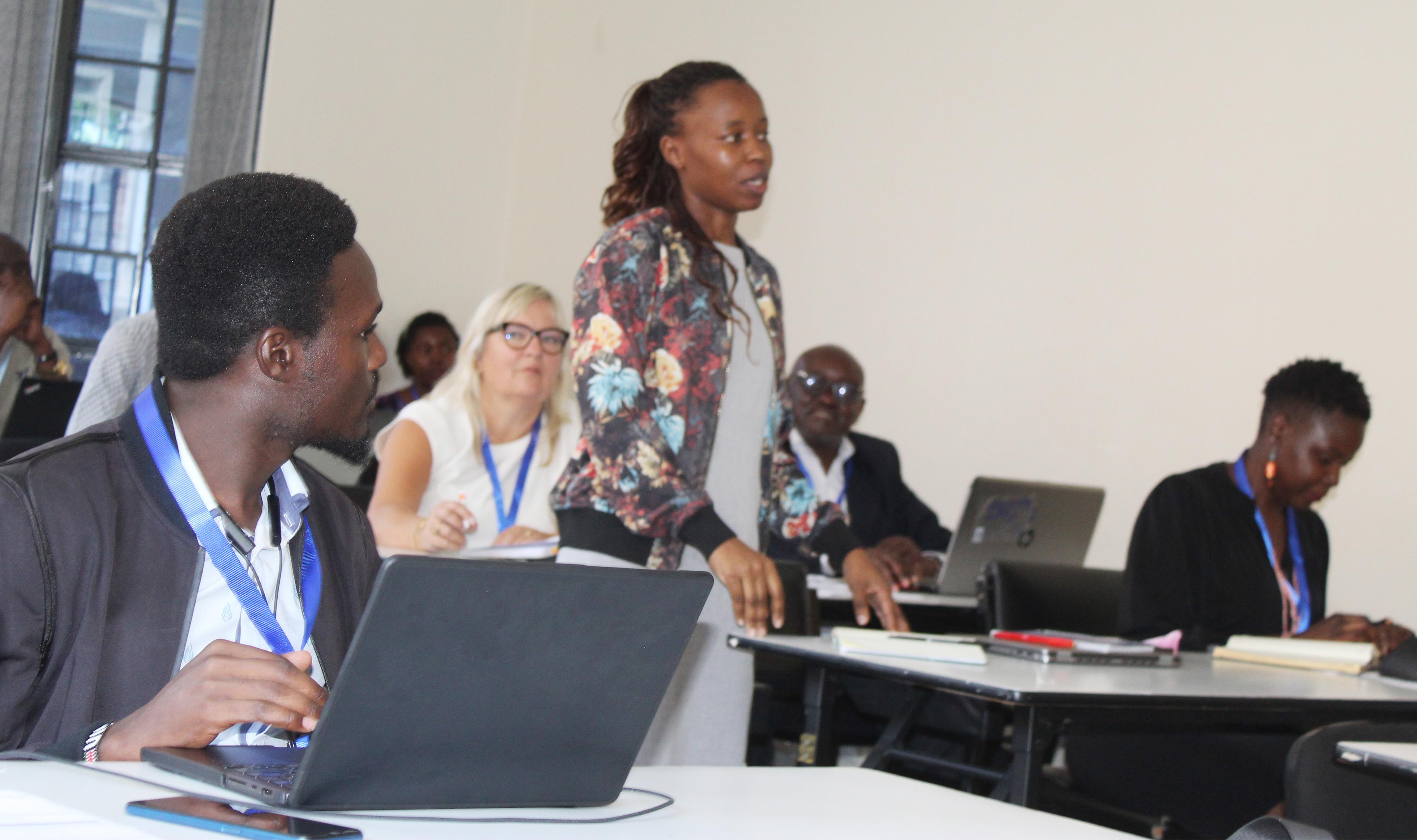
“For CLIMA, stakeholders are essential, not simply people to consult after the research is done, but partners who can help determine which problems matter most, what actions are realistic, what data is available, and how findings can be used,” said Prof. Thumbi Mwangi, CLIMA’s principal investigator, during the project’s first convening of stakeholders.
Besides working closely with stakeholders, CEMA is implementing the project together with Kenya Medical Research Institute (KEMRI) Air Pollution Centre of Excellence, Air Quality Systems East Africa (AQS) and TNO Netherlands.
At the recent stakeholder discussion (one of the many to come) hosted by CLIMA, participants and the project team, among several issues discussed include candidate interventions, data needs and gaps, and the need to bring even more stakeholders to future discussion.
In the discussions, top priority interventions picked by collaborators include clean cooking, urban public and informal transport electrification, solarisation of public facilities, climate-resilient infrastructure, and non-motorised transport and active mobility.
Other priority interventions discussed include solarisation of health facilities, cleaner waste management, waste recycling and upcycling, biofuel production, industrial energy efficiency, climate-smart agriculture and sustainable livestock, afforestation and catchment agroforestry.
Waste-to-energy technologies were also discussed as a possible way to address waste-management challenges while generating energy. Participants emphasised that their climate-mitigation potential needs to be considered alongside environmental and health risks. They raised particular concerns about processes involving plastics and other potentially hazardous materials, which may produce pollutants that are not routinely monitored or adequately controlled by conventional systems.
Across these discussions, participants were aligned on the importance of assessing climate interventions beyond their potential to reduce greenhouse-gas emissions. Assessments should also consider health, environmental sustainability, social and economic impacts, implementation challenges and the availability of appropriate technologies. A systems-based approach was recommended to identify trade-offs and unintended consequences across sectors.
CLIMA aims to develop detailed evidence on air quality and heat exposure in the Nairobi metropolitan area, examine emissions, and estimate the health, social and economic benefits of possible interventions.
The discussions reflected CLIMA’s collaborative approach; stakeholders help shape problems the research addresses, which actions are practical, what evidence is needed and how findings will be used for the greater good.
AQS co-principal investigator Prof. Maina Muniafu, whose team will establish and maintain an air-quality monitoring network over the study period, highlighted the importance of determining with stakeholders which pollutants to measure and where monitoring would be most useful.
TNO CLIMA co-principal investigator Dr. Bas Henzing outlined how emissions inventories and modelling can help identify pollution sources, and that they should be tailored to the actions participants consider important, such as clean cooking, traffic, or renewable energy. The inventory could then help assess those actions’ health co-benefits and support explaining their value to the public.
CEMA’s CLIMA PhD fellow Vincent Kongo described how the team’s work will also estimate health and economic effects.
“By working together to choose, assess, and act on the right interventions, Kenya can turn climate ambition into greater benefits for communities,” said Prof. Thumbi.